

Your First Car
October 1, 2026 6:45 pmYour First Car: How to Make a Smart Choice on a $5,000–$10,000 Budget
Buying a first car is a big milestone for a teenager—and usually a big decision for the whole family. Morrison Motor Group General Manager JP Wolfenden shares practical advice for Kiwi teenagers and their parents.
For teenagers, a first car means freedom and independence: getting to school, work, sport, friends or study without relying on Mum or Dad. For parents, there are usually a few more questions: Is it safe? Is it reliable? What will it cost to insure? And what happens when something goes wrong?
The smartest approach is to make the decision together and look beyond the price on the windscreen. The better question is: can you afford to buy it, insure it, fuel or charge it, maintain it and eventually sell it?

Start with the budget behind the budget
If you have $8,000 available, you don’t necessarily want to spend all $8,000 on the car. Keeping $1,000–$2,000 aside can help cover insurance, a pre-purchase inspection, servicing, tyres, licensing or an unexpected repair.
Before looking at cars, agree on two numbers:
- Your maximum purchase price.
- Your ongoing monthly budget for fuel or charging, insurance, servicing, tyres, WoF and repairs.
Get an insurance quote for the actual young driver before buying. Premiums can vary significantly between vehicles.
Key takeaway: Don’t spend the entire budget buying the car. Leave some money for owning it.
Put safety ahead of looks
Teenagers might be thinking about how a car looks, while parents are probably thinking about how well it protects their new driver. Both are fair considerations, but safety should come first.
Check the exact make, model and year on Rightcar and compare its current safety rating. Look beyond airbags too. Features such as electronic stability control, reversing cameras and autonomous emergency braking may be available depending on the vehicle.
Key takeaway: A first car should be something both the driver and their parents feel comfortable with.
Look at the cost of ownership, not just the price
A $7,000 car isn’t necessarily cheaper to own than a $9,000 car. Consider:
- Fuel or charging: How many kilometres will it travel each week?
- Insurance: What’s the actual premium and excess?
- Servicing: Is there a good service history?
- Tyres and brakes: Are they likely to need replacing?
- WoF and licensing: When do they expire?
- Road User Charges: Do they apply?
Remember, a WoF is a safety inspection. It doesn’t guarantee that the engine, transmission or hybrid or EV battery is in perfect condition.
A $6,000 car that immediately needs tyres, servicing and repairs could end up costing more than an $8,500 car that’s been properly maintained.
Key takeaway: Look at what the car will cost over the next year—not just what it costs today.
Choose the powertrain that suits your routine
Today’s first-car buyer has more choice than ever. Alongside conventional petrol vehicles, there are hybrids, plug-in hybrids (PHEVs) and pure electric vehicles (EVs).
There isn’t one option that suits everyone. The right choice depends on budget, driving habits and access to charging.
Hybrid
A conventional petrol hybrid combines a petrol engine with an electric motor and can be particularly efficient around town. It doesn’t need to be plugged in, making it a relatively simple option for someone who wants lower fuel consumption without changing their routine.
Plug-in hybrid
A PHEV has a larger battery that can be charged externally. It can cover some shorter trips using electric power, while the petrol engine provides extra flexibility for longer journeys. To get the most from a PHEV, you’ll need somewhere convenient to charge it.
Pure EV
A pure EV runs entirely on electricity, with no petrol engine. For a teenager whose driving is mostly predictable daily trips and who can charge at home, an EV can offer some significant advantages. There’s no petrol to buy, and EVs generally have fewer moving mechanical components than petrol-powered vehicles, which can mean less routine mechanical servicing. They’re also quiet and provide instant electric power.
For a used EV, battery condition is important. Ask about battery health, charging capability and real-world driving range, and have the vehicle properly checked before buying.
Key takeaway: Choose the powertrain that suits the driver’s budget, daily routine and access to fuel or charging—not simply the latest technology.
Think about reliability and resale
A common model with readily available parts and mechanics who know it can be easier to own than an unusual car that looked like a bargain.
Check the service history and find out what major maintenance could be coming up, such as a cambelt, transmission service or, for a hybrid or EV, checks on the battery system. It’s also worth thinking ahead: when the teenager eventually moves on to another car, will this one still have reasonable resale value?
Key takeaway: A good first car should be practical to own now and reasonably easy to sell later.
Check the car, not just the advertisement
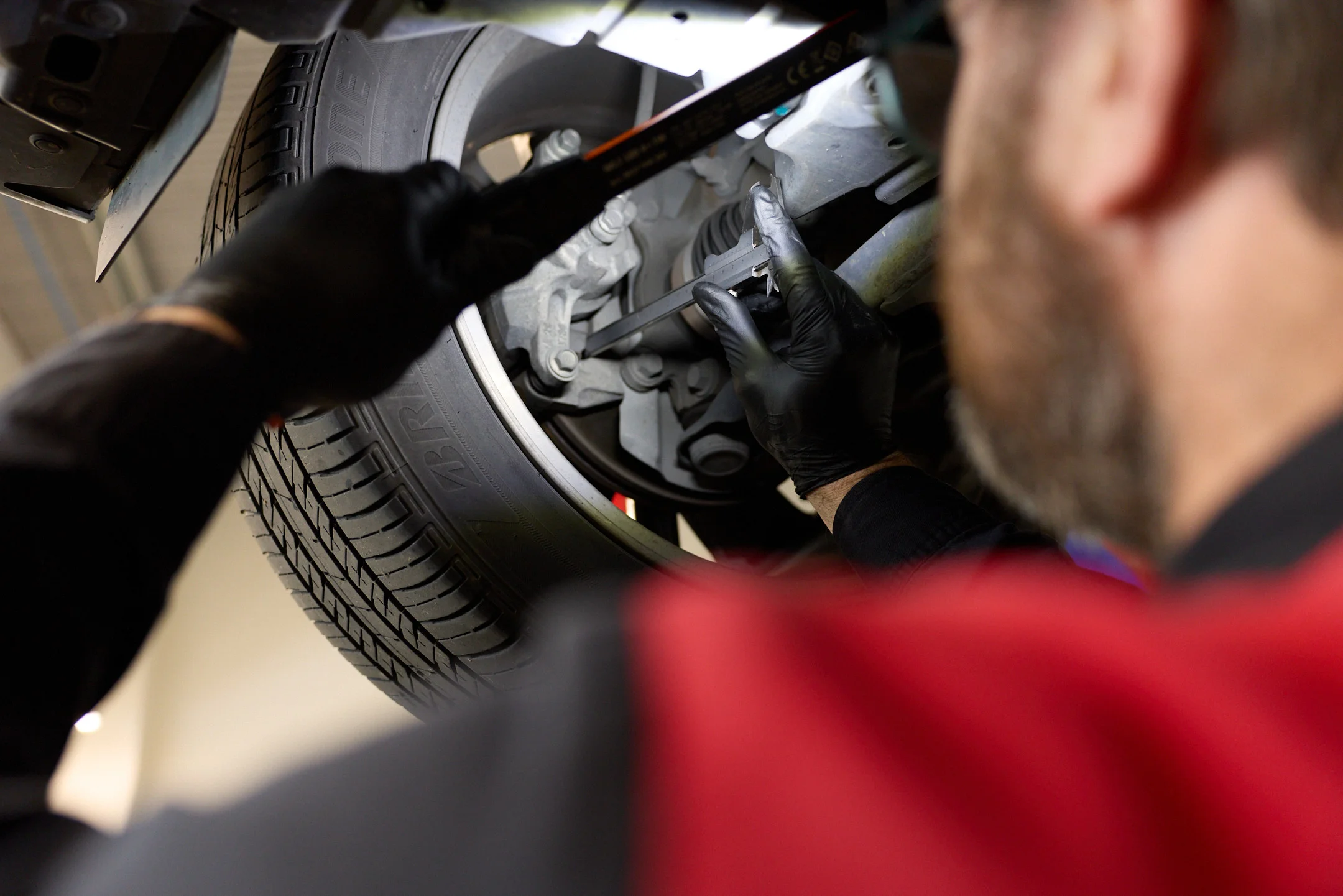
A shiny car and a fresh WoF don’t tell you everything. View it in daylight, take it for a proper test drive and, where possible, take someone experienced with you. Most importantly, consider an independent pre-purchase inspection.
Check:
- WoF and licensing.
- Odometer and service history.
- Warning lights.
- Tyres, brakes and steering.
- Signs of accident damage or rust.
- Whether the vehicle has been reported stolen.
- The PPSR for money owing.
- For hybrids and EVs, the condition of the battery and electric systems.
Buying through a registered motor vehicle trader like Morrison Motor Group will generally provide you with more consumer protection than buying privately. If buying privately, independent checks become even more important.
Key takeaway: Don’t buy a car just because it looks good in the photos!
Question time
Based on what you’ve considered when purchasing a first car, which option would you choose?
- Car A: $6,000, cheap insurance, good fuel economy and 180,000 km.
- Car B: $10,000, newer, but with higher insurance and running costs.
- Car C: $9,000 used EV, with low running costs but a smaller range and the need to charge at home.
Answer: There isn’t necessarily a right answer! Compare the safety rating, service history, insurance, fuel or charging costs, upcoming maintenance and inspection results.
Car A could be excellent value if it’s been well maintained. Car B might make more sense if it needs less immediate work. Car C could be a smart option if its battery is healthy and the family’s driving and charging setup suits it. And sometimes, there’s an alternative decision you can make: simply keep looking.
First-car checklist
Based on my experience, before you look to buy, I recommend that you:
- Agree on the total budget and keep money in reserve.
- Work out annual kilometres and typical daily trips.
- Compare petrol, hybrid, PHEV and EV options.
- Get insurance quotes before buying.
- Compare fuel or charging, servicing, tyres, licensing and RUC where applicable.
- Check the vehicle history and PPSR.
- Get an independent pre-purchase inspection.
- Don’t be afraid to walk away if the numbers don’t stack up.
The bottom line
A first car doesn’t need to be perfect. It does, however, need to be safe, reliable and affordable to own.
For teenagers, it’s about getting the freedom that comes with having a car. For parents, it’s about knowing their teenager is driving something suitable, safe and financially manageable.
Whether that means a petrol car, hybrid, PHEV or pure EV, choose based on how the car will actually be used, rather than simply choosing the newest, cheapest or most exciting option. Take your time, ask questions, do your homework and remember: if a car doesn’t feel right, you’re allowed to walk away.
Need a hand choosing a first car?
Buying a first car can feel like a lot to take on. If you’re a parent, a teenager or a family trying to work out what makes sense, the team at Morrison Motor Group is happy to help.
We can talk through vehicle options, budgets, running costs and what to look for when buying a first car—whether you’re considering a petrol, hybrid, PHEV, EV or simply aren’t sure what would suit you.
You don’t need to know exactly what you’re looking for before you come in. We’re happy to have a chat and help you understand your options.
Visit: morrisonmotorgroup.co.nz
Phone: (03) 341 2020
With locations in Christchurch, Rangiora and Ashburton, Morrison Motor Group has a wide range of new and used vehicles to suit different budgets and lifestyles.